RUSAL'S RECYCLED ALUMINIUM AND INERT ANODE TO REDUCE CARBON DIOXIDE EMISSIONS.
December 22, 2025
Mostly, the bauxite is used as a raw material, and it is processed into pure alumina. The electrolysis process turns alumina into aluminium using a large amount of electrical energy. Science has made advances in recent years. Advanced technologies of aluminium production have lessened the energy consumption and CO2 emissions.
RUSAL—One of the world's largest aluminium producers, says that RUSAL is the first company to come up with a technology for producing high-quality aluminium from scrap by electrolysis.
This technology can turn off-grade scrap with impurities into a metal with a record-low carbon footprint. The company has its own resource base and maximum control over the entire production cycle, from the bauxite extraction to the making of high-value-added products.
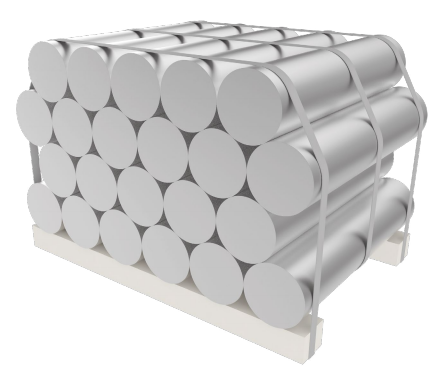
According to the Russian classification, this reprocessed metal is a highly pure metal, equivalent to primary aluminium with the purity higher than 99.7% (P1020), and therefore, has the quality and the capability of using it in high-tech industries—automotive, aerospace and food packaging industries.
“The technology was successfully demonstrated at prototype pots with the amperage of 500 A and 3 kA. Tests have confirmed the high purity of the product and stable production of aluminium with a purity of over 99.7%, operational stability of the prototypes, achieving stable operating cycles lasting 40–45 days, and high energy efficiency with about 9 MWh of energy consumed to produce one tonne of aluminium from scrap. For comparison, the most efficient conventional pots consume 12–14 MWh of energy to smelt one tonne of metal from alumina,” RUSAL says.
Theoretically, with a chemically or electrochemically reactive anode in the electrolysis cell, the cell reaction would be:
Theoretically, a fully inert anode is chemically or electrochemically nonreactive in the electrolysis cell.
RUSAL can combine the technology with hydro power to produce grade P1020 metal with a carbon footprint of less than 1 tonne of greenhouse gases (full scope).
The company has also advanced to the second phase in the production of a batch of rolling slabs with a record-low carbon footprint. According to RUSAL, the metal meets the low-carbon aluminium (LCA) benchmark of less than 4 t CO2-eq./t within Scopes 1&2, aligning with those of the leading international analytical agencies.
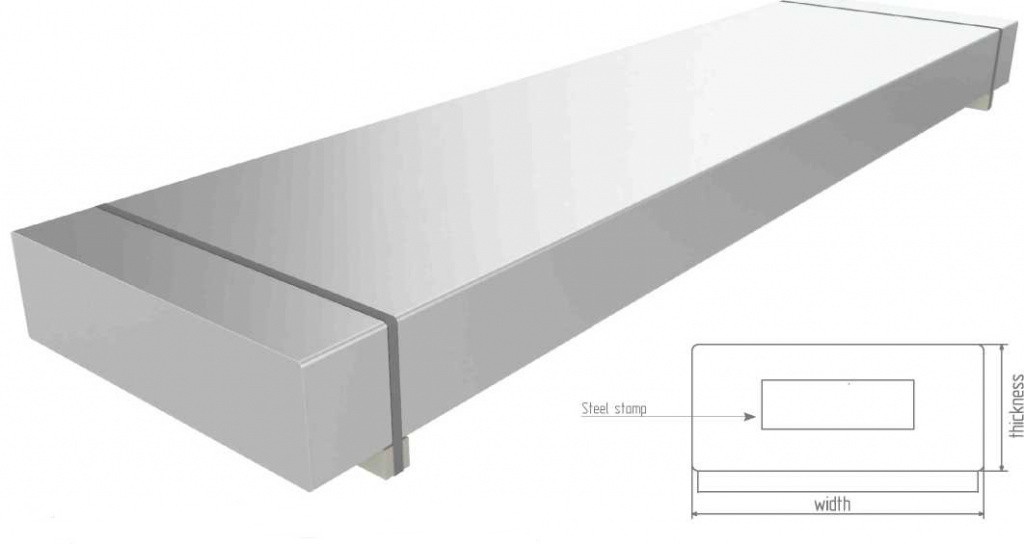
The metal is available on the market under the ALLOW brand.
These products are widely applied in the construction industry to produce numerous elements of buildings and structures across various industries. For example, in the automotive industry, they are used to manufacture large vehicle body parts, whilst in the consumer industry, produce canning products, cookware, foil and packaging.
More →
RUSAL is a leading producer in the global aluminium industry.
- Rusal - 1 Vasilisy Kozhinoi St., Park Pobedy,Victory Park Business Center, 121096, Moscow, Russia. +7 495 720 51 70, +7 495 720 51 71
- Reference - Halvor Kvande, Per Arne Drabløs, "The Aluminum Smelting Process and Innovative Alternative Technologies", J Occup Environ Med, 2014

Home | Contact: info@gazersdigest.com
©2020-2026 Gazer’s Digest is an information-sharing platform using reliable sources to support the human-written articles. Gazer’s Digest includes topics, thought to be useful for the readers, and the contents may be related to investments. Gazer’s Digest is also a digital learning tool that helps you understand complex concepts, stay updated on trends, and sustainable solutions.