HYDROGEN-POWERED TOSHIBA’S SUPERCONDUCTING MOTOR
October 13, 2025
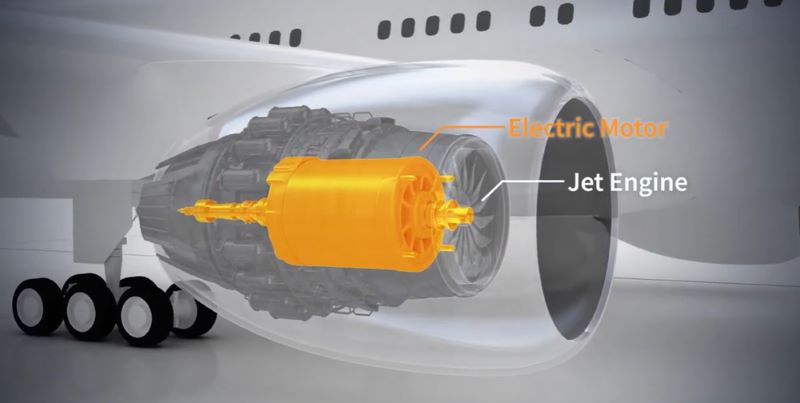
It’s smaller and lighter than conventional motors. Toshiba’s superconducting motor has made a breakthrough in aviation—fuel efficiency and extended flight range. The prototype superconducting motor was successfully developed in 2022. Toshiba has developed this superconducting motor for the next-generation large mobility applications—including zero-CO₂ aviation and shipping.
Related: Ballard’s FCWAVE—the emission-free generator for vessels
According to Toshiba, the superconducting motor is both lightweight and compact, and capable of delivering 2 megawatts of output. Its weight is only one-tenth of the conventional motor with an equivalent output. The electricity from hydrogen fuel cells can be combined with the superconducting motor to make enough propelling force.
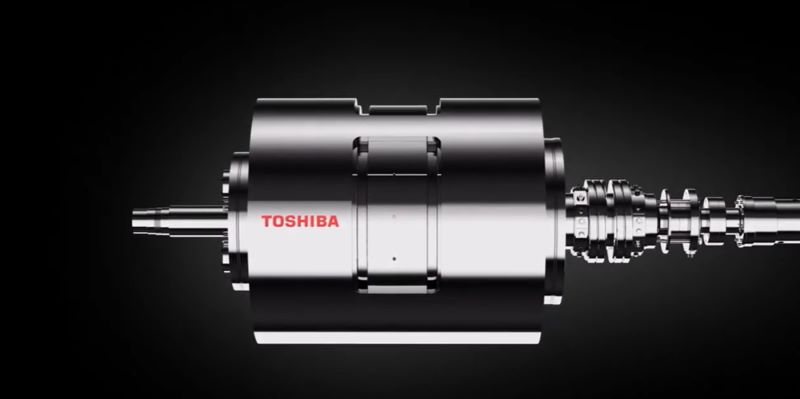
The company says most aircraft still fly on jet fuel, the availability of hydrogen is still limited, and there are problems with transportation and storage.
Some methods for producing hydrogen use fossil fuels. Ultrapure water is an expensive feedstock. Renewable electricity—Wind, Ocean Wave—can power large-scale hydrogen production on offshore locations. However, hydrogen production with seawater electrolysis (SWE) faces technical and economic challenges. Researchers remain firm in their commitments to improve SWE methodologies.
More → Toshiba Superconducting Motors

Home | Contact: info@gazersdigest.com
©2020-2026 Gazer’s Digest is an information-sharing platform using reliable sources to support the human-written articles. Gazer’s Digest includes topics, thought to be useful for the readers, and the contents may be related to investments. Gazer’s Digest is also a digital learning tool that helps you understand complex concepts, stay updated on trends, and sustainable solutions.