H2-FCWAVE CAN SERVE ALMOST ANY TRAIN ROUTE.
March 29, 2026
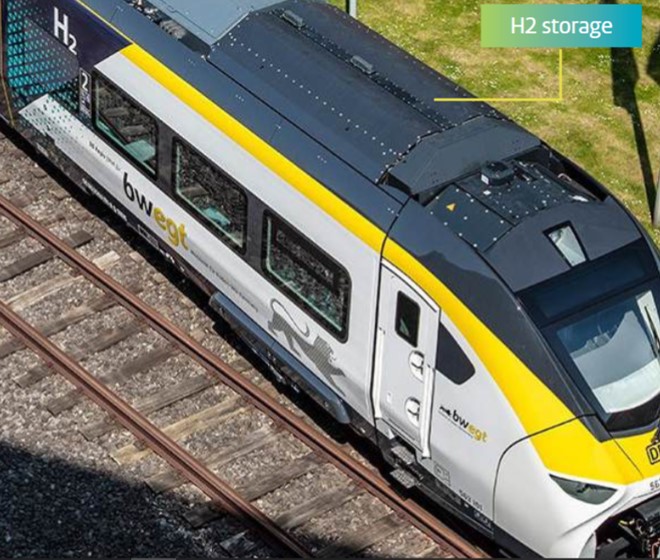
FCwave™ is a cabinet based modular fuel cell system scalable to Mega Watts.
Ballard says almost any train route can be served by fuel cell power. Hydrogen-powered trains use the fuel cells and batteries.
FCwave™ can use low-carbon hydrogen as fuel to charge the batteries that provide a stable power for the traction motors, in addition to the energy from regenerative braking.
Related: Ballard’s FCwave—The Emission-Free Generator for Vessels
Ballard’s fuel cells support passenger trains to operate without overhead catenary infrastructure and power substations, similar to diesel engines. However, hydrogen fuel cells are a powerful zero-emission alternative to diesel-powered passenger trains.
Low total lifecycle cost is achieved with no cost for overhead catenaries, product performance optimization, fuel cell stack durability, efficiency, and lower maintenance requirements. A fuel cell requires significantly less maintenance than an internal combustion engine. Fuel cell stacks that have reached the end of life can be refurbished.
According to Ballard, there are more than 10 fuel cell electric rail projects powered by Ballard. In 2024, the Stadler FLIRT H2, powered by Ballard, set a new benchmark for traveling 2,803km in 42 hours without refueling or recharging.
More →
Ballard Power Systems (HC), Canada. 604-454-0900

Home | Contact: info@gazersdigest.com
©2020-2026 Gazer’s Digest is an information-sharing platform using reliable sources to support the human-written articles. Gazer’s Digest includes topics, thought to be useful for the readers, and the contents may be related to investments. Gazer’s Digest is also a digital learning tool that helps you understand complex concepts, stay updated on trends, and sustainable solutions.